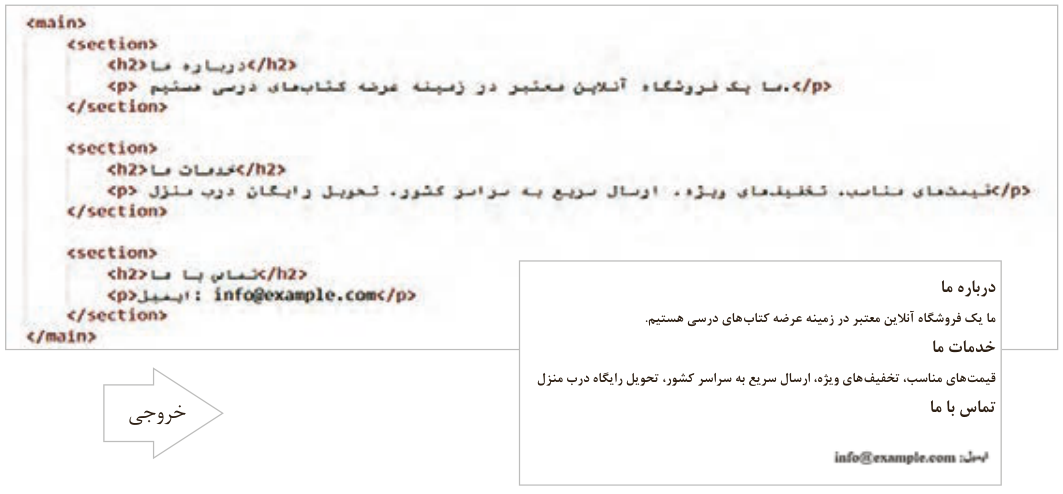
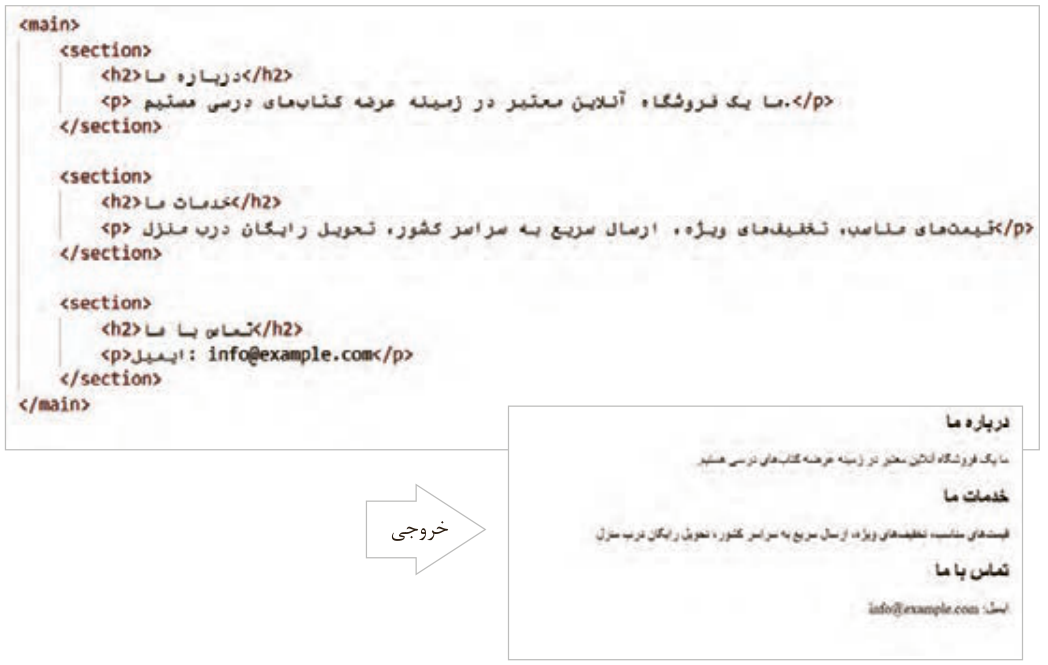
<section>: برای تقسیمبندی محتوای صفحه به بخشهای مختلف استفاده میشود (شکل18).
شکل ۱۸
<article>: این برچسب برای نگهداری یک محتوای مستقل و کامل قابل استفاده است، مانند پستهای وبلاگ (هر پست درون یک برچسب article) اخبار، (هر خبر درون یک برچسب article)، نظرات کاربران (هر نظر درون یک article مجزا) و کارت محصول (شامل تصویر، عنوان و قیمت).
شکل ۱۹
صفحه ۱۱۲
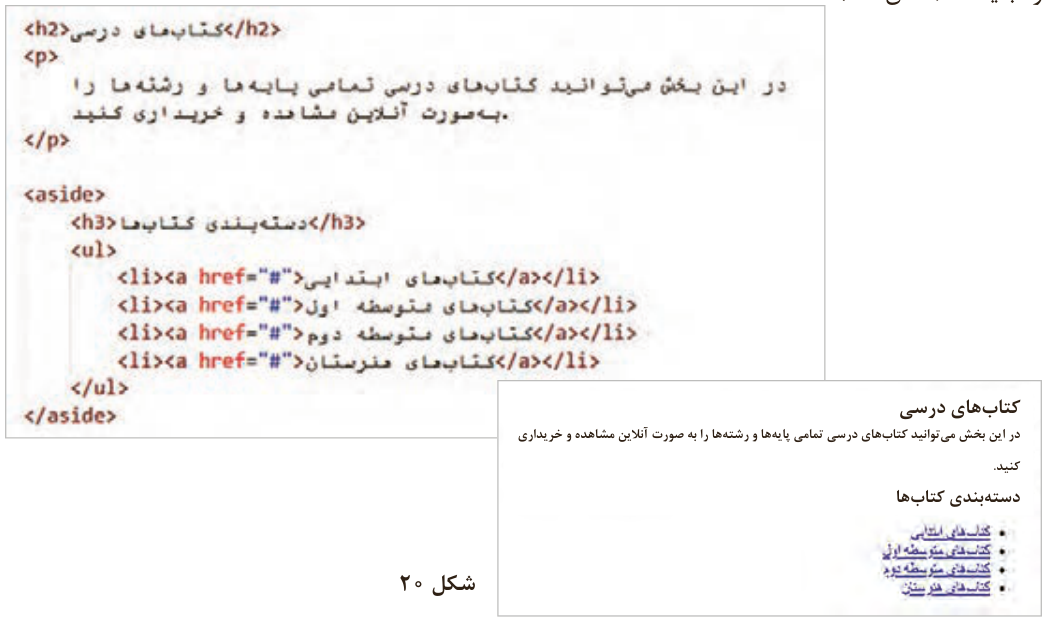
<aside>: برای نگهداری محتواهای جانبی که به محتوای اصلی صفحه ارتباط دارند، مانند پیوندها، نظرات و تبلیغات (شکل 20).
شکل ۲۰
<footer>: برای تعریف بخش پایانی یک سند یا بخش استفاده میشود. برای تعیین ظاهر این عناصر از CSS استفاده میشود. در این قسمت اطلاعاتی مانند حق کپیرایت، نام نویسنده و طراح، لینکهای تماس، سیاستهای سایت و لینک شبکههای اجتماعی قرار میگیرد. (شکل21)
شکل ۲۱
عناصر غیرمعنایی
عناصر غیرمعنایی در HTML عناصری هستند که فقط برای گروهبندی و نگهداشتن محتوا استفاده میشوند و مفهوم خاصی دربارۀ محتوای خود انتقال نمیدهند. دو نمونه مهم از این عناصر، توسط تگهای <div> و <span> ایجاد میشوند. این عناصر برای سازماندهی بخشهای مختلف صفحه بهکار میروند، اما چون معنای مشخصی ندارند، استفاده بیرویه از آنها میتواند درک صفحه را برای موتورهای جستوجو و ابزارهای دسترسی دشوار نماید.
تگ <div> یک عنصر block-level ایجاد میکند؛ به این معنی که محتوای این عنصر در یک خط جدید قرار میگیرد. این تگ برای ایجاد ساختارهای پیچیده در صفحات و تقسیمبندی محتوا به بخشهای مختلف به کار میرود.
تگ <span> یک عنصر inline ایجاد میکند و محتوای آن در یک خط جدید قرار نمیگیرد. این تگ برای گروهبندی و استایلدهی بخشهای کوچکی از متن در درون یک خط استفاده میشود.
تگهای <div> و <span> جلوه بصری ندارند و برای تنظیمات ظاهری آنها از CSS استفاده میشود.
صفحه ۱۱۳
Page 111
<section>: divides the content of the page into sections (Figure 18).
Figure 18
<article>: holds a self-contained, complete piece of content, such as blog posts (each post in an article tag), news (each item in an article tag), user comments (each comment in a separate article), and product cards (with an image, title, and price).
Figure 19
Page 112
<aside>: holds side content related to the main content of the page, such as links, comments, and ads (Figure 20).
Figure 20
<footer>: defines the end part of a document or section; CSS is used to set how these elements look. This part holds information such as the copyright, the names of the author and designer, contact links, the site's policies, and links to social networks. (Figure 21)
Figure 21
Non-semantic elements
Non-semantic elements in HTML are elements used only to group and hold content; they say nothing special about their content. Two important examples are created with the <div> and <span> tags. They are used to organize the parts of a page, but because they have no particular meaning, overusing them can make the page harder for search engines and accessibility tools to understand.
The <div> tag creates a block-level element, which means its content starts on a new line. It is used to build complex structures in pages and divide content into sections.
The <span> tag creates an inline element whose content does not start on a new line. It is used to group and style small parts of text within a line.
The <div> and <span> tags have no visual effect of their own; CSS is used to style them.